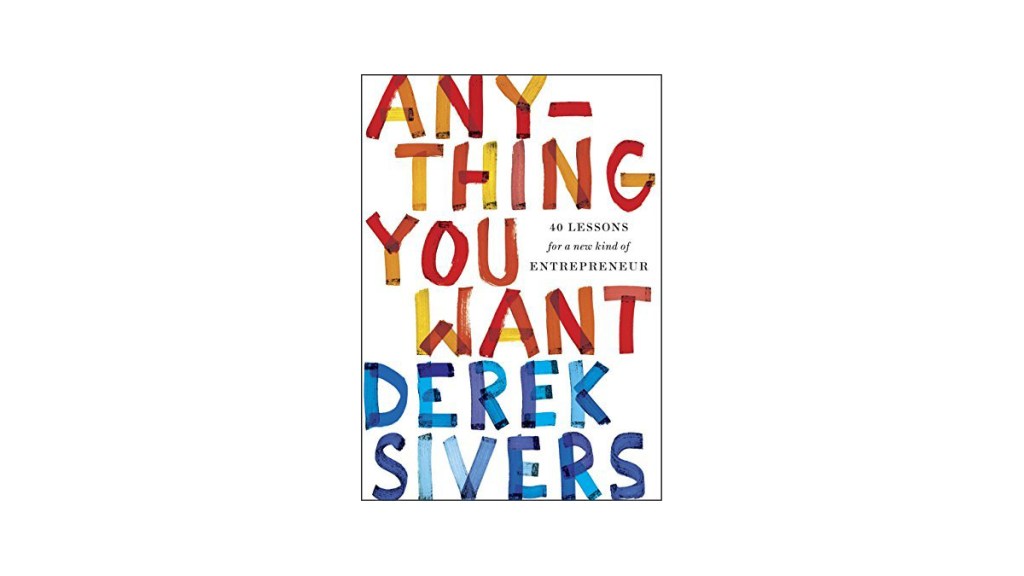
I just finished reading Anything You Want by Derek Sivers for the second time, and I wanted to reflect on three key ideas that I found most valuable. The book is a very short read, but is filled with sound advice, and an encouraging tone. I feel like this book in particular makes business super approachable, and simplifies good business practice into concise lessons from Siver’s own career.
The first takeaway that I wanted to discuss is this simple idea: “Business is not about money. It is about making dreams come true for others and yourself.” When I read this the first thing that came to mind was a very similar quote by Zig Ziglar: “You can have everything in life you want, if you will just help other people get what they want.” This is a really powerful idea, and I think that many people including myself, can get caught up in the numbers and nothing else. At the end of the day, providing others with value is the most important thing that you can do. I have seen evidence of this benefitting real business: Last year I got the opportunity to intern and work at a local print shop in my town, and learned so much more than I thought possible from my mentor and boss. One of the things that initially surprised me was how much time he spent interacting with the community, customers, and friends even when there was no direct business transaction going on. He purposefully volunteered his time, money, and energy to the people around him to provide value in their lives, and in return anytime someone needed printing they thought of him and his business. Now this is definitely not the only reason that the business is successful, but it is a huge advantage. The same story played out with Sivers and his company CD Baby. It didn’t start as a way to get rich fast, the company started to help his friends and other independent musicians.
The second takeaway is from a two-page chapter in the book called “A business model with only two numbers”. The chapter talks about keeping things simple, especially pertaining to the money side of the business. You don’t need a team of Harvard MBAs or Wall Street Analysts to set up a good business plan, and Sivers exemplifies this by listing CD Baby’s pricing, “a 35$ album setup fee and a flat 4$ cut per CD sold”, which lasted the company to 10 million dollars in sales and beyond.
The final point that I found really valuable in the book, is to retain a sense of humor, humanity, and casualness when doing business. Whether you are a solo entrepreneur or a 100,000 employee company, people appreciate interacting with other people, rather than being sent a bland impersonal email. Sivers gives an example in the book about how when a musician wanted to make changes to an album on their website, CD Baby would send them a message saying “We will do anything for pizza”. The point is that instead of receiving a typical automated “We are working to resolve the issue” notice, people would rather know that there is a human being working hard to provide value to them on the other side of that screen.
I highly recommend this short read, as it makes the daunting task of entrepreneurship seem doable as long as you are willing to put in a serious amount of work and learn from a few mistakes. Money really is secondary, and when you think about the most successful entrepreneurs of our time, they all have a mission that is to provide value for others.
 Spencer Cummins